A
Round lamps, level face
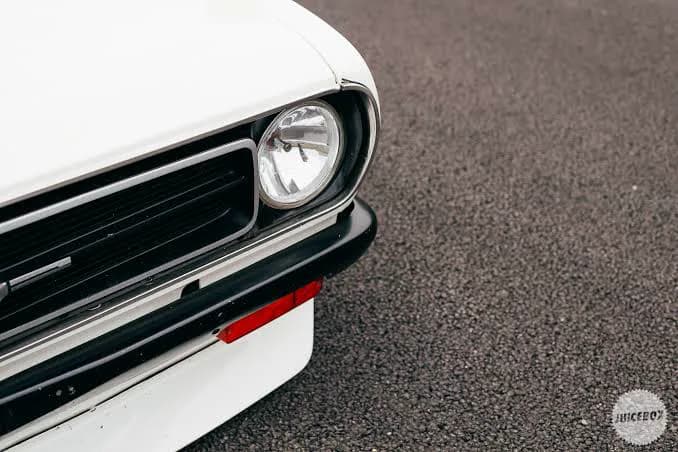
Circular headlamps flanking a plain horizontal grille — a face designed to be read at a glance and repaired with hand tools, not admired.
Born from Japan’s Sunny lineage and built into a South African icon.
A Working Vehicle, Made Icon
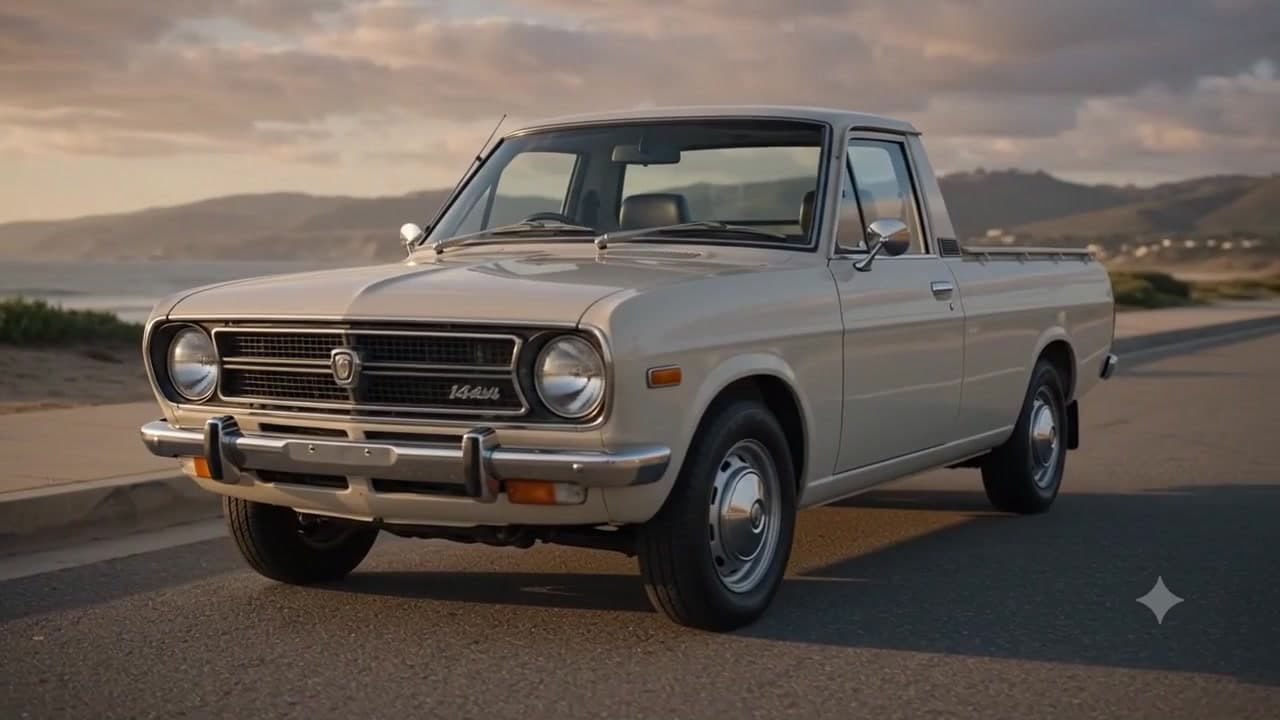
The Datsun Sunny Truck was never designed to impress. It was designed to start every morning, carry what it was asked to carry, and be fixed by hand when something wore out.
That plainness let it settle deeply into South African life — on farms, on building sites, outside small workshops — until the little bakkie became a fixture of the landscape rather than a product on it.
Heritage
Nissan introduces the Datsun Sunny Truck, factory code B120 — a light pickup derived from the Sunny passenger line, built for simple, dependable work.
The compact pickup arrives in South Africa as the Datsun 1200, quickly finding favour with tradespeople and small businesses for its low running costs and easy repairability.
Exact South African launch year varies across secondary sources; treat as an approximate early-1970s introduction.
The pickup grows into the Datsun 1400, carrying the larger A14 1.4-litre engine and setting the template that would define the model for nearly three decades.
Circa date — precise model-year transition differs by market documentation.
As Nissan phases out the Datsun brand internationally, the South African-built bakkie is re-badged the Nissan 1400 (chassis code B140), while its mechanical character stays largely unchanged.
Behind the familiar silhouette, the 1400 was quietly evolving. Later examples introduced considered mechanical improvements — including a five-speed gearbox — while preserving the simple rear-wheel-drive formula that had made the truck so dependable. Nothing changed for the sake of change; each refinement strengthened the same idea.
Specific update years differ between historical sources, so this is presented as a broader later-production development.
South African production of the Nissan 1400 concludes, closing out one of the country's longest continuous vehicle production runs and leaving behind one of its most recognisable small bakkies.
Sources — Nissan Motor Corporation — Global heritage archive (Sunny / Datsun lineage overview); Nissan South Africa — corporate history and Nissan 1400 production notes; South African automotive press — retrospective coverage of the Nissan 1400 / "Champ" bakkie; Period Datsun / Nissan 1400 sales literature (South African market, various years)
Design
There is no ornament on the 1400. Read from the front clip to the tailgate, each surface answers a practical question — cost, repair, load, or line of sight. Four details, in the order you meet them.
Circular headlamps flanking a plain horizontal grille — a face designed to be read at a glance and repaired with hand tools, not admired.
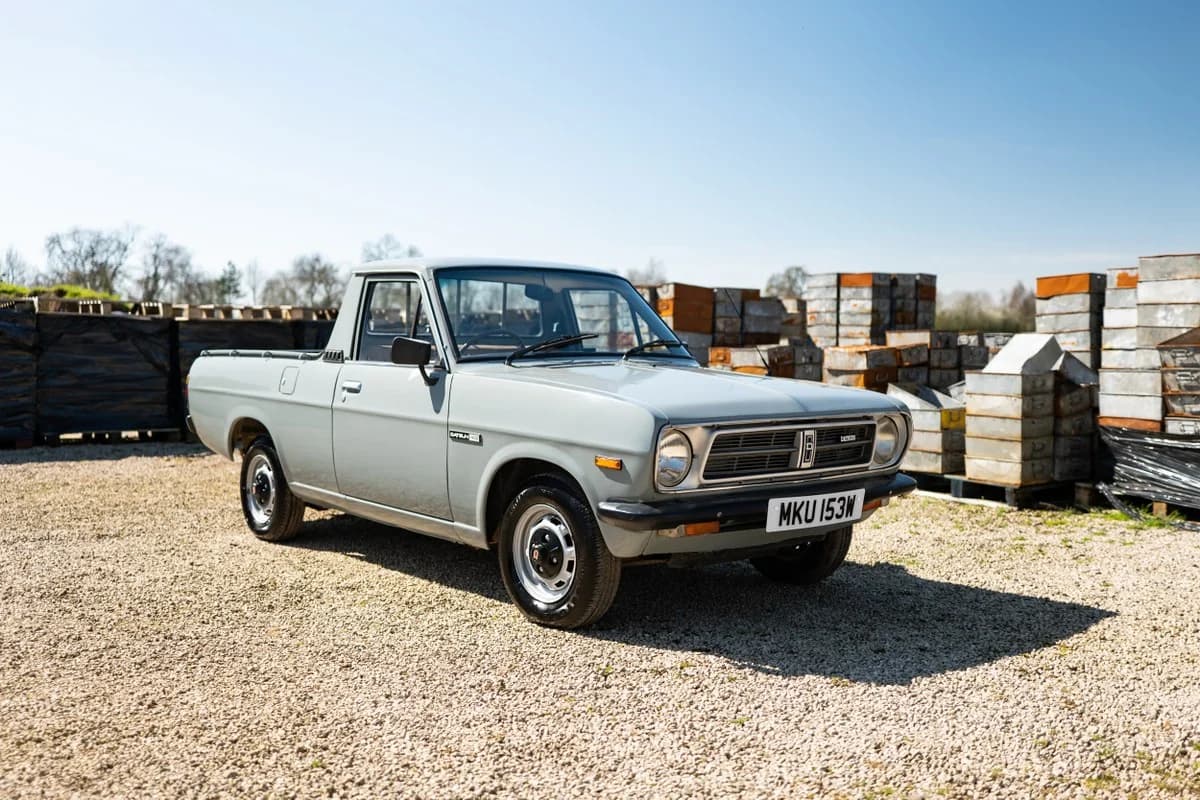
A full-width chrome bumper and unadorned steel wheels — the few bright parts on the truck, and the cheapest to replace.
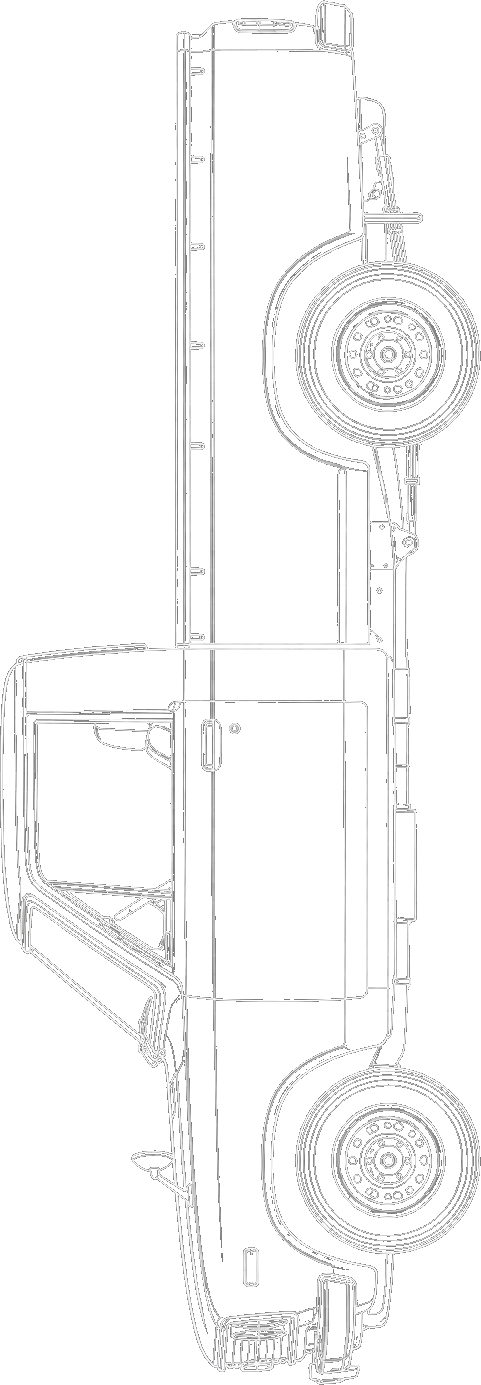
A single cab scaled tightly around two people, set ahead of a load bed that takes up most of the length — every proportion in service of the work.
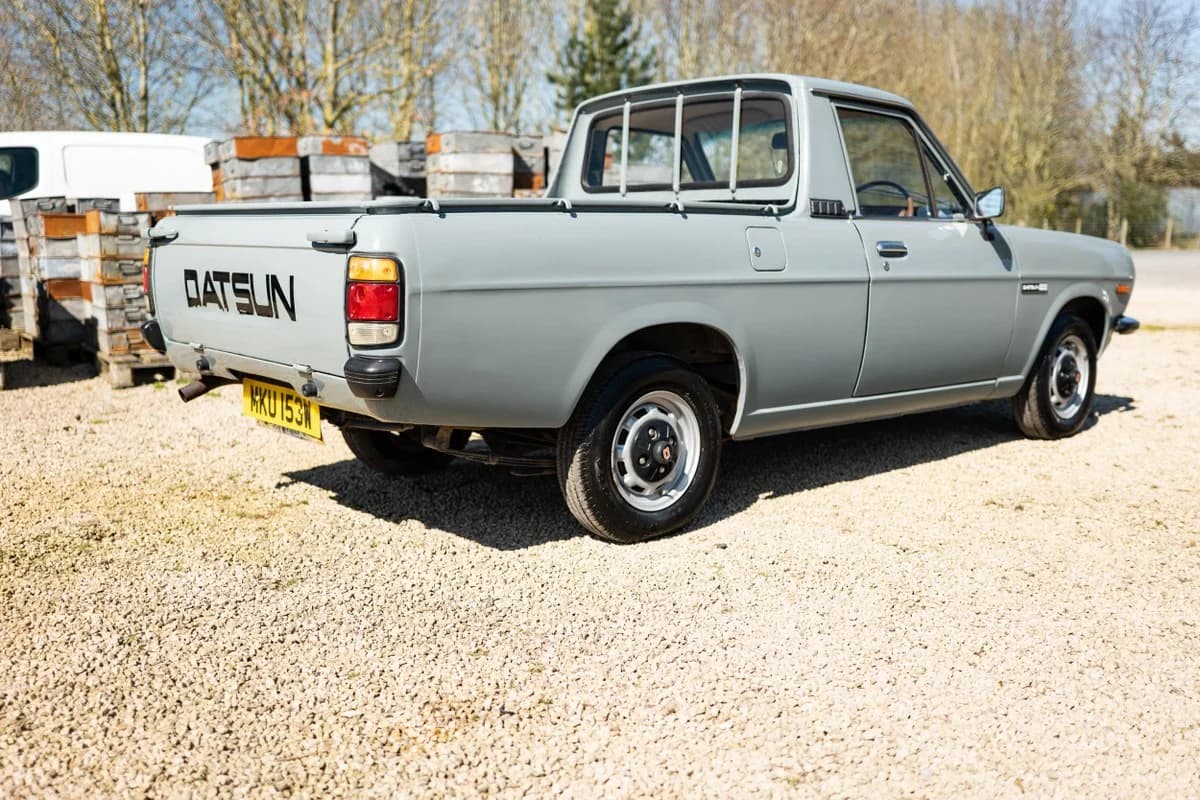
Slab sides, a simple drop tailgate stamped DATSUN, and lamps chosen for cost and availability — utility expressed as styling.
In the Round
The 1.4-litre A14 and its gearbox — the mechanical heart that kept the 1400 in production for three decades — as a digital study. Drag to walk around it, scroll to lean in, and pull it apart to see how little there is to go wrong.
The Working Machine
The 1400 changed gradually across nearly three decades. Rather than flatten it into one spec sheet, figures are grouped by what is well attested for the model era — with gaps left honestly open where sources disagree.
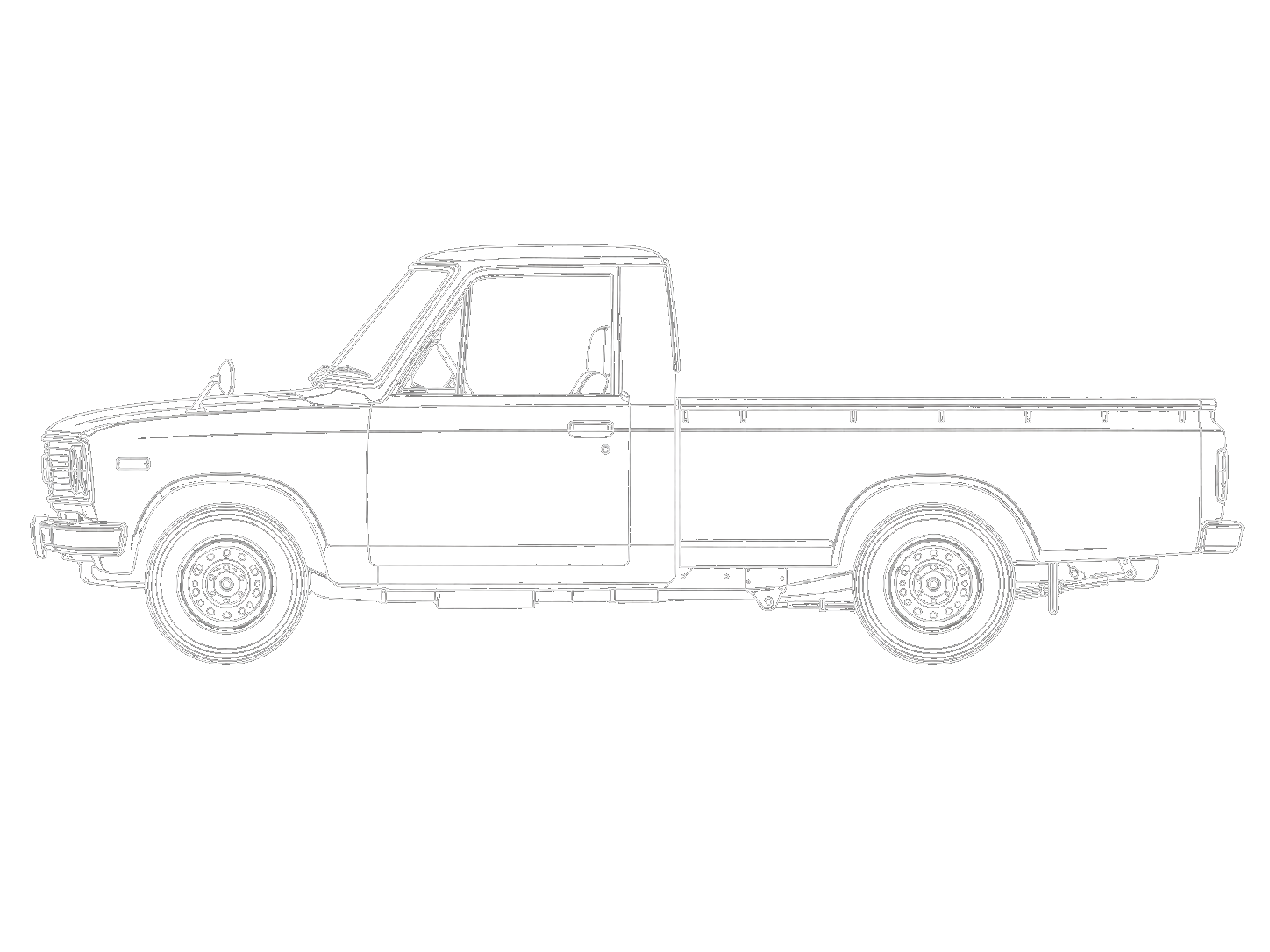
Output figures varied across model years and are not standardised across available sources — none are quoted here to avoid misrepresenting a specific year.
Sources — Nissan South Africa — corporate history and Nissan 1400 production notes; Period Datsun / Nissan 1400 sales literature (South African market, various years)
The five-speed gearbox was introduced on later production examples; earlier cars used a four-speed unit.
Sources — Nissan South Africa — corporate history and Nissan 1400 production notes; South African automotive press — retrospective coverage of the Nissan 1400 / "Champ" bakkie
Presented as a general production window; specific facelift and update dates vary across secondary sources.
Sources — Nissan South Africa — corporate history and Nissan 1400 production notes; South African automotive press — retrospective coverage of the Nissan 1400 / "Champ" bakkie
South African Legacy
“A vehicle that stays on sale for decades stops being a product — it becomes a backdrop.”
The 1400 remained in continuous South African production into 2008 — an unusually long run that let generations of tradespeople, small businesses and farms rely on the same simple, repairable platform.
That longevity is what gave the bakkie its emotional weight — a background presence in first jobs, family businesses, and the everyday errands that never make it into brochures.
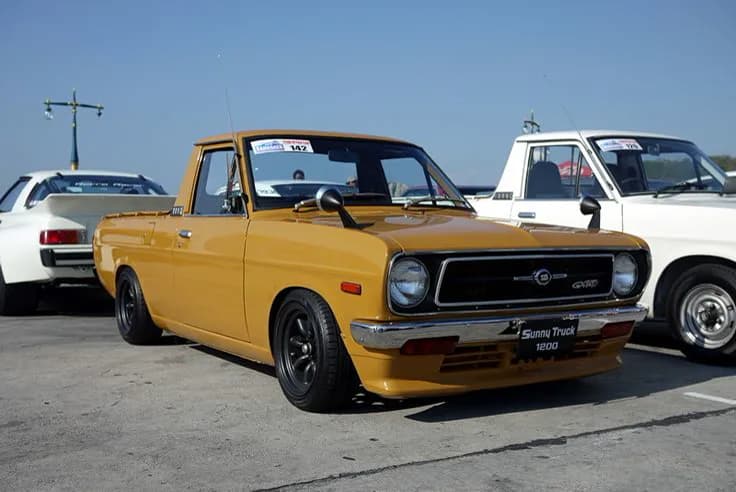
Low running costs and mechanical simplicity later made the 1400 — and its Sunny Truck relatives — a favourite base for modification. Lowered, wheeled and lovingly kept, they carry the shape into a second life. This site treats that chapter as culture, not verified factory history.
Interlude
Designed to work. Remembered for far more.
Archival Gallery
Survivor photographs and film stills, read like plates from an archive — the 1400 as it looks today, in the hands of the people who keep it running.
Survivor
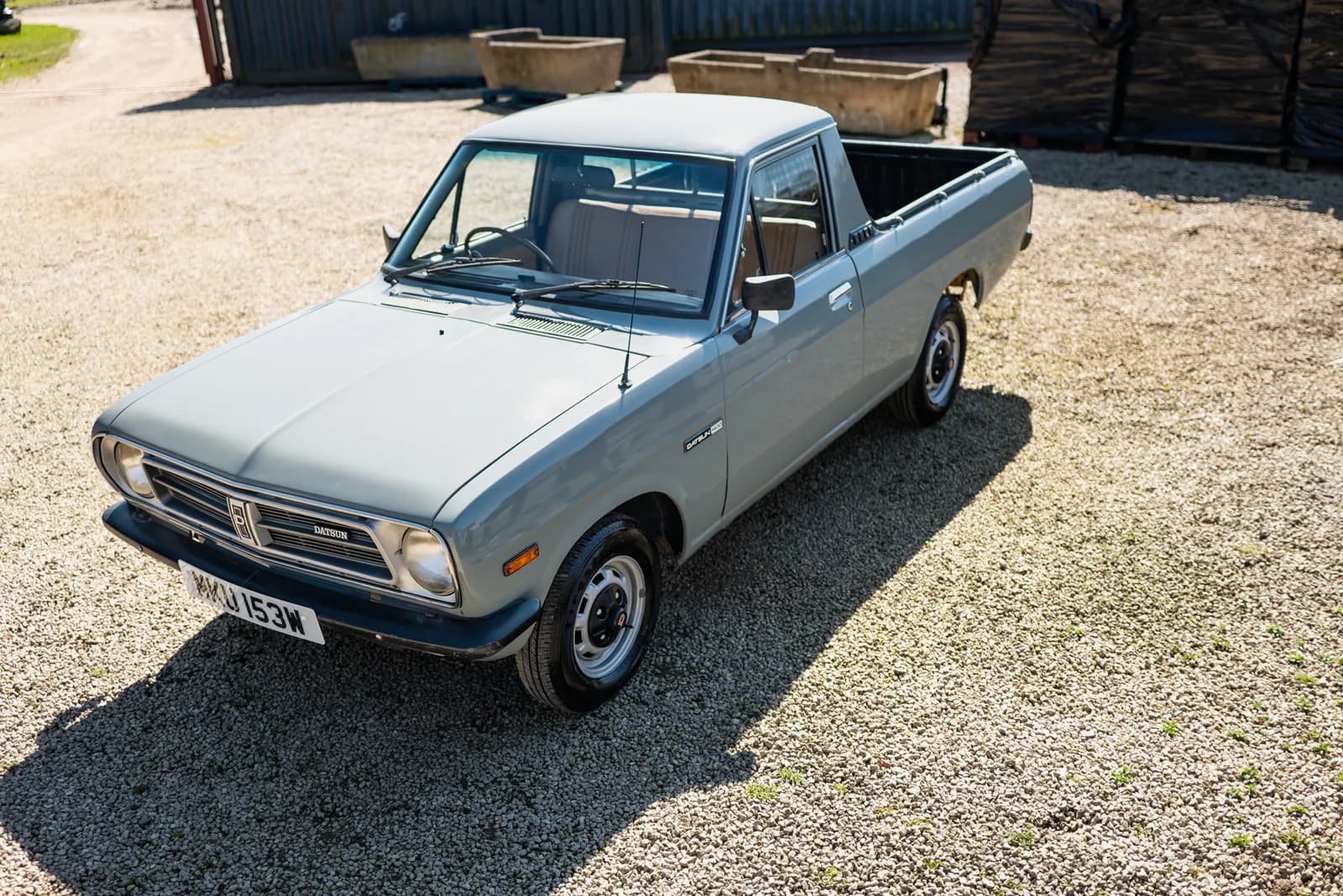
A survivor 1400 wearing its factory grey — straight panels, original steel wheels, and the quiet confidence of a truck that simply never stopped working.
1971 — 2008